A Trip Down the Water Facilities Route of Be’eri Forest
Getting there: The Reim parking lot is next to the Sa’ad-Reim road (232), about 4 km south of Kibbutz Be’eri. Turn west from the road onto a short dirt road that branches off from the road between the 38-39 km markers (milestones).
General information:
Tour duration: Up to 2 hours.
Tour type: Hiking/Driving/Biking trail; Picnic area
Route Length: 2.6 km, driving through a traversable scenic road, suitable for private vehicles.
It is recommended to come with your bicycles. The area offers some of the best bike trails in Israel, and there is something here for every level.
Difficulty level: Low
Rest Rooms on-site: During the “Darom Adom” (Red South) period, several restrooms are deployed on-site.
Possible picnic points: Picnic tables are scattered along the grove on the way to the water facilities route. Another array of picnic tables and water fountains is close to the Saqiyahn well, about 1.5 km from the parking lot.
WAZE – Re’im Parking Lot
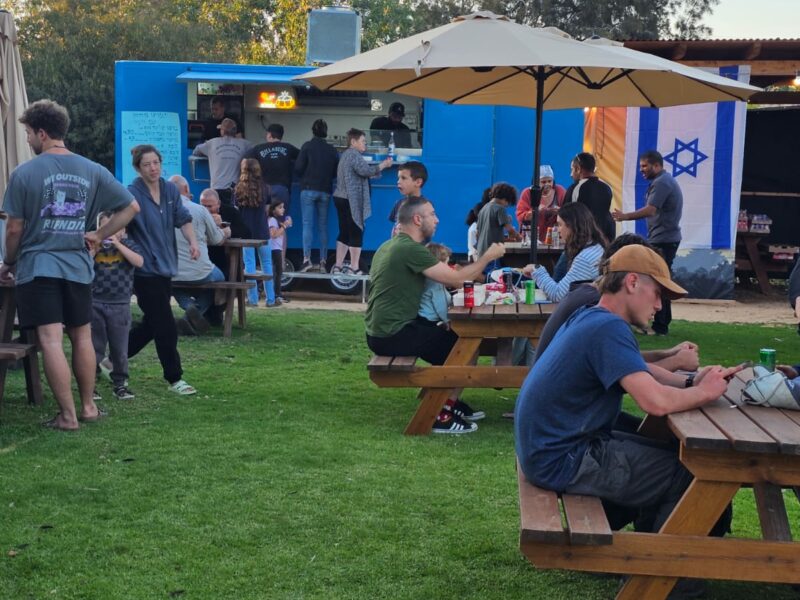
At the entrance to the site, there is a picnic area with picnic tables, water fountains and barbecue facilities. The complex is accessible to people with disabilities.
It is recommended to stop and walk around the site, admiring the remains of the Byzantine cisterns. The closest one is the central well of a large older settlement known in Arabic as “Al-Mandur” (Translation: an observatory, looking down from…), or currently as – Mador. Most remnants are likely Byzantine (approximately 1500 years ago). Water was collected into these cisterns from the yards and roofs of houses, and each cistern served one family, including drinking, bathing, watering the fields and local household agriculture and husbandry.
Continue along the path marked blue on the road closest to Nahal Grar. On the left, you will notice the impressive loess cliff of Nahal Grar– towering over the opposite river bank. It was formed by countless winter floods that gnawed and eroded the loess soil typical of the area.
You will come across waterholes with explanatory signs detailing and illustrating how they work. Then the path curves, and at the edge of the grove, on the right side of the road – there is a Saqiyah. The square concrete structure you see is a complex built around a deep well dug during the Ottoman rule. This watering system was fully restored and features a plaque with an exact drawing showing how this water lifting device works to bring up groundwater. The saqiya/s were small jugs or scoops fastened to a long belt operated by a large wooden cogwheel system, set in motion by animal power (donkeys, camels, etc.)
Continue further along and find Iglu-shaped structures protruding from the ground. These are, in fact, Byzantine cisterns.
Return to the trail and take it to the observatory overlooking the creek, where an impressive Bedouin Sheikh’s tomb dominates the area.
The site is filled with groves and waterholes. So, enjoy your visit but beware of tripping and falling into an unexpected pit…
The entire area is covered with a green blanket dotted with daisies and Anemones during the flowering season.